CGT and selling
Selling an investment property: depreciation and your CGT cost base
A depreciation schedule is not only for the years you hold the property. The same figures are used when your tax agent works out the capital gain, and they remain relevant around the 1 July 2027 CGT changes.
When you sell an investment property, capital works deductions you have claimed, or can still claim, generally reduce the cost base for capital gains tax. Depreciating assets are treated separately and may trigger a balancing adjustment. The CGT rules change from 1 July 2027, but the ATO says you do not need a valuation in place by that date.
Capital works reduce the cost base
Division 43 deductions you have claimed, or can still claim, are generally taken out of the cost base for a rental acquired after 13 May 1997.
Plant is a separate asset
Depreciating assets are not part of the property for CGT. On sale they are usually removed from the cost base and the sale proceeds, and a balancing adjustment may arise.
No valuation is due on 1 July 2027
The ATO said on 19 October 2026 that you do not need a valuation in place on that date, and you should not obtain one beforehand.
How do capital works deductions affect your cost base?
The cost base of a rental property is generally what you paid for it, plus certain buying, holding and selling costs that you have not already deducted. When you sell, the capital gain is worked out by comparing the sale proceeds with that cost base.
Capital works deductions are treated differently from those other costs. The ATO’s page on cost base adjustments for capital works says amounts you can claim as capital works deductions cannot be included in the cost base or the reduced cost base.
For a rental acquired after 13 May 1997, you generally subtract capital works deductions if you claimed them, or if you have not claimed them but still can, because the period for amending the relevant assessment has not expired. The ATO explains this on its capital gains tax on the sale of property page. There is a limited exception if you were unable to claim a deduction because you did not know the full amount or exact nature of the construction expense.
What happens to plant and equipment when you sell?
A depreciating asset — flooring, an air conditioner, white goods and similar items — is a separate asset from the property for CGT purposes. The ATO says the value of those assets at purchase and at sale is removed from the cost base and from the capital proceeds.
If you stop holding a depreciating asset because the property is sold, a balancing adjustment event generally happens. You compare the asset’s termination value with its adjustable value at that time. The difference is included in, or deducted from, your assessable income. The ATO’s guide to depreciating assets sets out that calculation.
| Division 43 capital works | Division 40 plant and equipment | |
|---|---|---|
| During ownership | Claimed each year at 2.5% or 4%, where the construction dates qualify. | Claimed as decline in value, where the asset is eligible — including the 2017 second-hand limits. |
| When you sell | Deductions claimed, or still claimable, generally reduce the property’s cost base. | A balancing adjustment may arise. The assets are separated from the property’s CGT calculation. |
| What a schedule provides | Construction costs, start dates, amounts claimed and amounts remaining. | Each asset’s cost, method, adjustable value and an allocation of the sale for your tax agent. |
How does a depreciation schedule help at sale?
Your tax agent needs a reliable record of what has already been claimed, what remains, and how the price should be split between the building and any depreciating assets. A quantity surveyor’s depreciation schedule, kept up to date, is that record.
If construction costs were never estimated, or later work was not written up, a CGT cost base report can document those costs for the sale return. A residential CGT cost base report is $595 + GST, with the same typical 5 business day turnaround from receipt of all information.
Capital works come off the cost base
An investor bought a rental after 13 May 1997 for $800,000 and paid $20,000 in stamp duty and legal costs. During ownership they claimed $18,000 in Division 43 capital works deductions. They later sell the property.
For CGT, the starting cost base of $820,000 is generally reduced by the $18,000 already claimed, to $802,000, before selling costs are added and before any depreciating assets are separated from the property. That reduction increases the capital gain by $18,000 compared with a cost base that ignored the capital works claims. Any eligible plant is then dealt with through a balancing adjustment, not as part of that building cost base.
Illustrative example only. The figures are not a quote or a tax calculation for any property, and they ignore other adjustments your tax agent may need to make.
The 1 July 2027 CGT changes, without overstating them
From 1 July 2027 the CGT rules for many owners change, including the treatment of the 50% discount for gains that accrue after that date. Our separate article on negative gearing and CGT changes from 1 July 2027 covers the policy.
On 19 October 2026 the ATO said taxpayers may need to determine the market value of a CGT asset immediately before 1 July 2027 when they later calculate a capital gain or loss. That “doesn’t require your clients to have a valuation in place on this date, and they shouldn’t obtain one before this date, as a valuation can’t be forward-looking.â€
Taxpayers may also have a choice to use an alternative “apportionment methodâ€. The ATO says the Government is still developing that method, and the ATO will provide further guidance once it has been enacted. Until then, any draft Treasury formula should not be treated as final. What you can do now is keep purchase, improvement and depreciation records in good order.
Frequently asked questions
Does claiming depreciation increase my capital gain when I sell?
Capital works deductions you have claimed, or can still claim, generally reduce the cost base of a rental acquired after 13 May 1997, which can increase the capital gain. Depreciating assets are handled separately through a balancing adjustment, not as a simple add-back to the building’s cost base. Your tax agent should apply both sets of rules to the sale.
What is a balancing adjustment?
When you stop holding a depreciating asset — including because you sell the property — you compare its termination value with its adjustable value. If they differ, the difference is included in, or deducted from, your assessable income. The ATO’s 2026 guide to depreciating assets explains the calculation. A depreciation schedule gives your tax agent the adjustable values to start from.
Do I need a valuation by 1 July 2027?
No. In a note published on 19 October 2026, the ATO said the possible need to determine market value immediately before 1 July 2027 does not require a valuation to be in place on that date, and you should not obtain one before that date because a valuation cannot be forward-looking. Any gain or loss on a deemed disposal immediately before 1 July 2027 is deferred until you actually sell, or another CGT event happens.
What is the apportionment method?
The ATO says taxpayers may have a choice to determine the 1 July 2027 value using an alternative method, known as the apportionment method, instead of a market valuation. The Government is still developing that method. It should not be treated as final until it is enacted. The ATO will provide further guidance at that point.
How does a depreciation schedule help with CGT?
It records construction costs, capital works already claimed, amounts remaining, and the depreciating assets that need to be separated from the property at sale. Those figures are what your tax agent uses for the cost base and any balancing adjustment, and they remain useful when the 2027 CGT changes later have to be applied. A residential schedule is $595 + GST.
Is a CGT cost base report the same as a depreciation schedule?
No. A depreciation schedule is used to claim yearly deductions while you own the property. A CGT cost base report documents construction and improvement costs for the capital gains calculation, including where original receipts are missing. A residential CGT cost base report is $595 + GST, typically 5 business days from receipt of all information.
Sources
Checked against the ATO pages below on 24 November 2026, Australia/Brisbane time. Tax law can change, so read the ATO page before you act and speak to a registered tax agent about your property.
- ATO: Cost base adjustments for capital works (last updated 22 June 2026)
- ATO: Capital gains tax on the sale of property
- ATO: Guide to depreciating assets 2026 — what happens if you no longer hold or use a depreciating asset
- ATO: CGT reform – guidance and market valuations (published 19 October 2026)
- ATO: Second-hand depreciating assets
Order a residential schedule
A residential tax depreciation schedule is $595 + GST. Typical turnaround is 5 business days from receipt of all information. Commercial work is quoted per job.
This page is general information about Australian tax depreciation, not tax advice. It does not take account of your objectives, financial situation or needs. A registered tax agent should apply the rules to your property. TaxShield was founded in 2004 and prepares quantity surveyor schedules from the documents you supply.
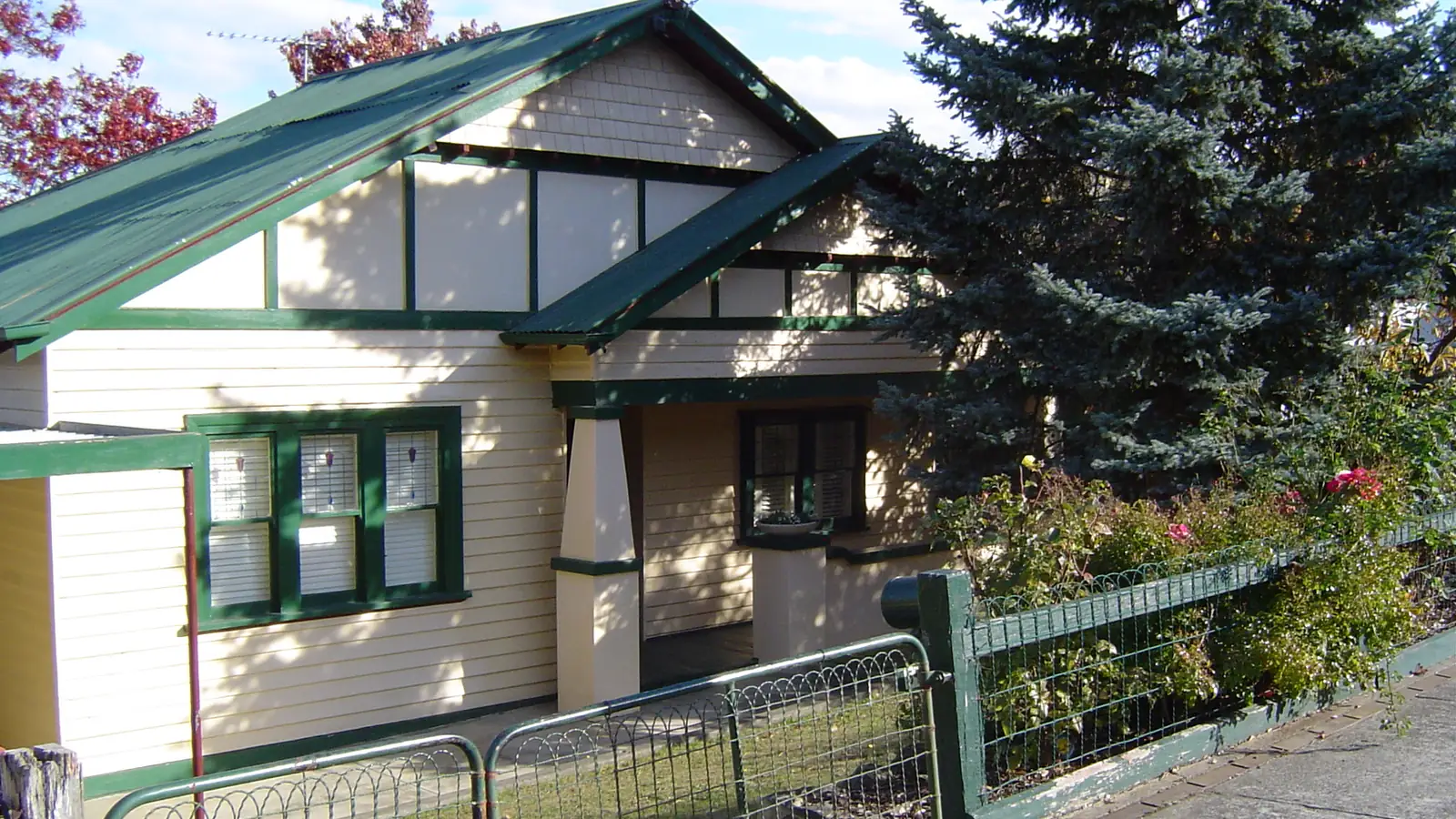
Photograph: Californian bungalow style house in Preston, Victoria, by Nick Carson, Wikimedia Commons, public domain. Cropped for this page.